Amsterdam wants to be fully circular by 2050. A great ambition, but a circular city requires more than good plans. It requires space. Space for making, repairing and reusing. And that space is under pressure.
Amsterdam has big circular ambitions. By 2030, the city wants to use 50 percent fewer new raw materials than in 2016. By 2050, Amsterdam wants to be fully circular. But a circular economy does not emerge simply by consuming less. Things actually need to happen: products need to be repaired, materials processed, and goods locally made and reused. That requires businesses, skilled workers and square metres.
A circular city must also be a productive city
And that productive space is scarce in Amsterdam. We want to use products longer, repair more and stimulate shorter supply chains, but the businesses that need to make this happen in practice are finding it increasingly difficult to find a place in the city.
What disappears does not easily return
You could say: that is the market. In a city where space is scarce and expensive, the functions that can pay the highest price per square metre will win. That is economically understandable, but it does not have to be the best outcome for the city as a whole.
Because once productive activity disappears from the city, it does not easily return. A manufacturing sector is not just a collection of individual businesses. It comes with an entire ecosystem of skilled workers, knowledge, suppliers and entrepreneurs who depend on each other. Once that network slowly disappears, you cannot rebuild it in ten years’ time. Even if you urgently need it by then.
And the circular economy demands more repair, reuse and local production. Shorter supply chains. Products that last longer. A circular city needs a productive infrastructure.
The soul of the city
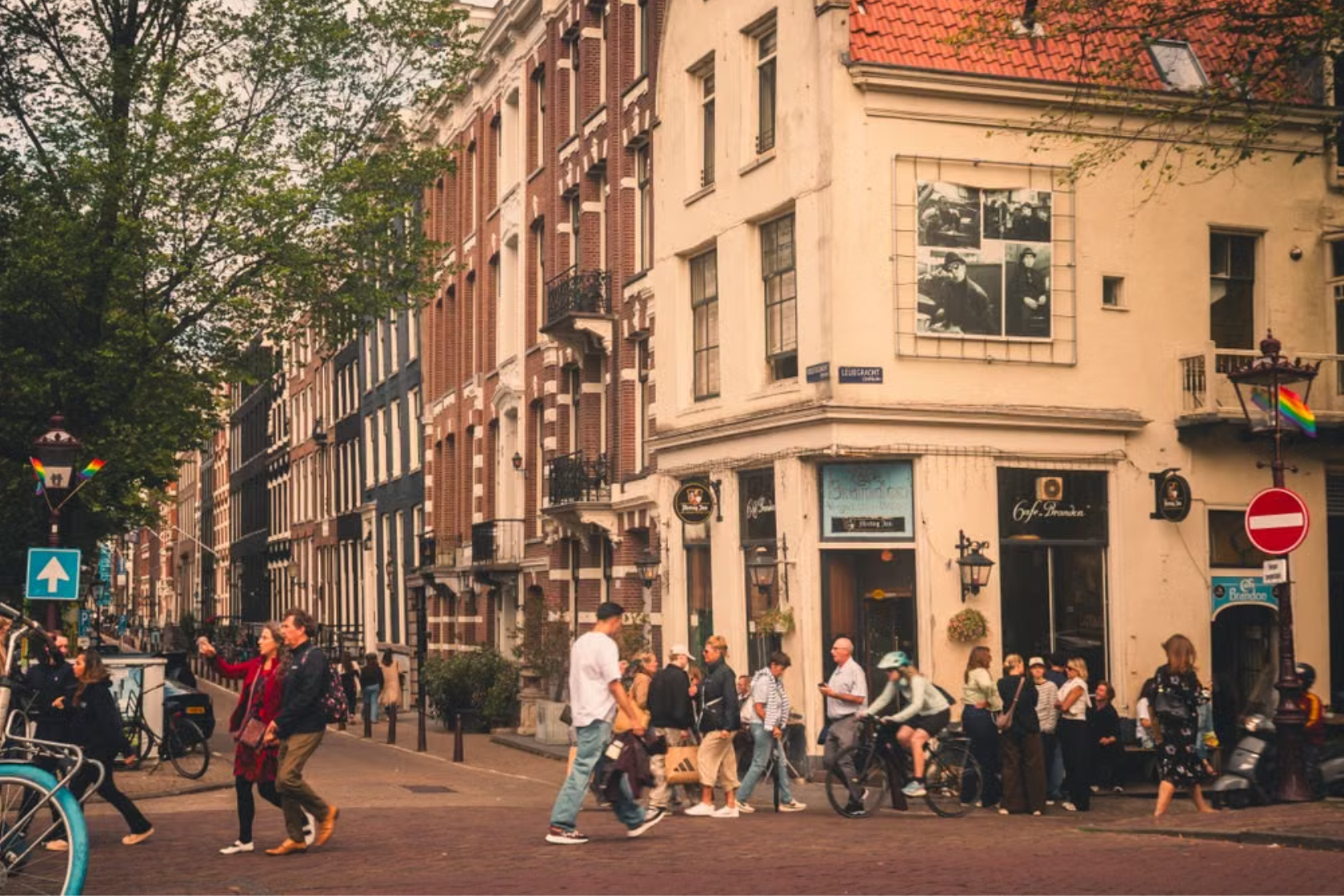
But more is at stake than circular targets. A city derives its appeal from its mix. From the fact that people live and eat there, but also work, create, repair and make things. A furniture maker behind a workshop door, a studio on an upper floor, a bicycle repair shop on the corner. These functions bring different people, different knowledge and a different rhythm to a neighbourhood.
When those functions disappear, the city becomes more one-sided. Streets start to look more alike. Neighbourhoods lose something of their character. That may sound like a matter of atmosphere, but it also affects the economy. People and businesses are drawn to cities where things happen. Where knowledge, craftsmanship and creativity come together. A city that becomes primarily a place to live and consume risks losing part of that appeal over time.
A mix of functions also makes a city more resilient. An urban economy with different types of activity can adapt more easily to change than a city that depends heavily on a limited number of functions.
The market does not automatically create the city we want
That is why we cannot leave the question of which functions Amsterdam needs entirely to the property market. The market determines who can pay the most for a square metre today. Not which functions Amsterdam will need in twenty years. That is a public choice.
The municipality already acknowledges this. The Business Strategy 2020–2030 explicitly states that Amsterdam wants to preserve sufficient space for craft manufacturing, repair and logistics. The circular ambitions make that choice all the more urgent.
Amsterdam is full; that is precisely why we must choose
If Amsterdam truly wants to be circular by 2050, it must also preserve the physical infrastructure for that economy. That does not mean every maker must stay in their current location at all costs. But it does mean we need to determine now which productive functions we want to preserve, how much space they need and where that space should be.
The market for business premises in Amsterdam is tight. That does not make the challenge less important. On the contrary. If there is barely any space left, we can hardly afford to lose suitable space without noticing.
The question is therefore not only where to find new space. We also need to look at the space that already exists. Can upper floors above shops be better used? Can existing business parks be used more intensively? Which locations must we deliberately not let disappear? Municipalities have tools for this: from environmental policies and area plans to ground leases, subsidies and public-private partnerships. Because if the market does not make the choice, the city will have to.
Not nostalgia, but looking ahead
This is not a plea to bring Amsterdam back to a time of factories on every street corner. It is about the economy we will need in the future.
A city that wants to use fewer raw materials must be able to repair. A city that wants to reuse materials needs businesses that can organise that. A city that wants shorter supply chains must keep space for local production. And a city that wants to remain attractive and economically resilient benefits from a mix of functions and activity.
Space for making and repairing is not a luxury. It is infrastructure for the city Amsterdam says it wants to become. The ambition is already there. Now the space.
Want to read more about local making and sustainable entrepreneurship? Read all blogs.