In Costa Rica, with a cacao fruit in her hands, Malou Dronkers knew for certain: this is it. Not the sweet version, but the raw, flavourful fruit straight from the tree. Curiosity took over, and Malou threw herself wholeheartedly into the craft of chocolate making, entirely by herself.
From the bean
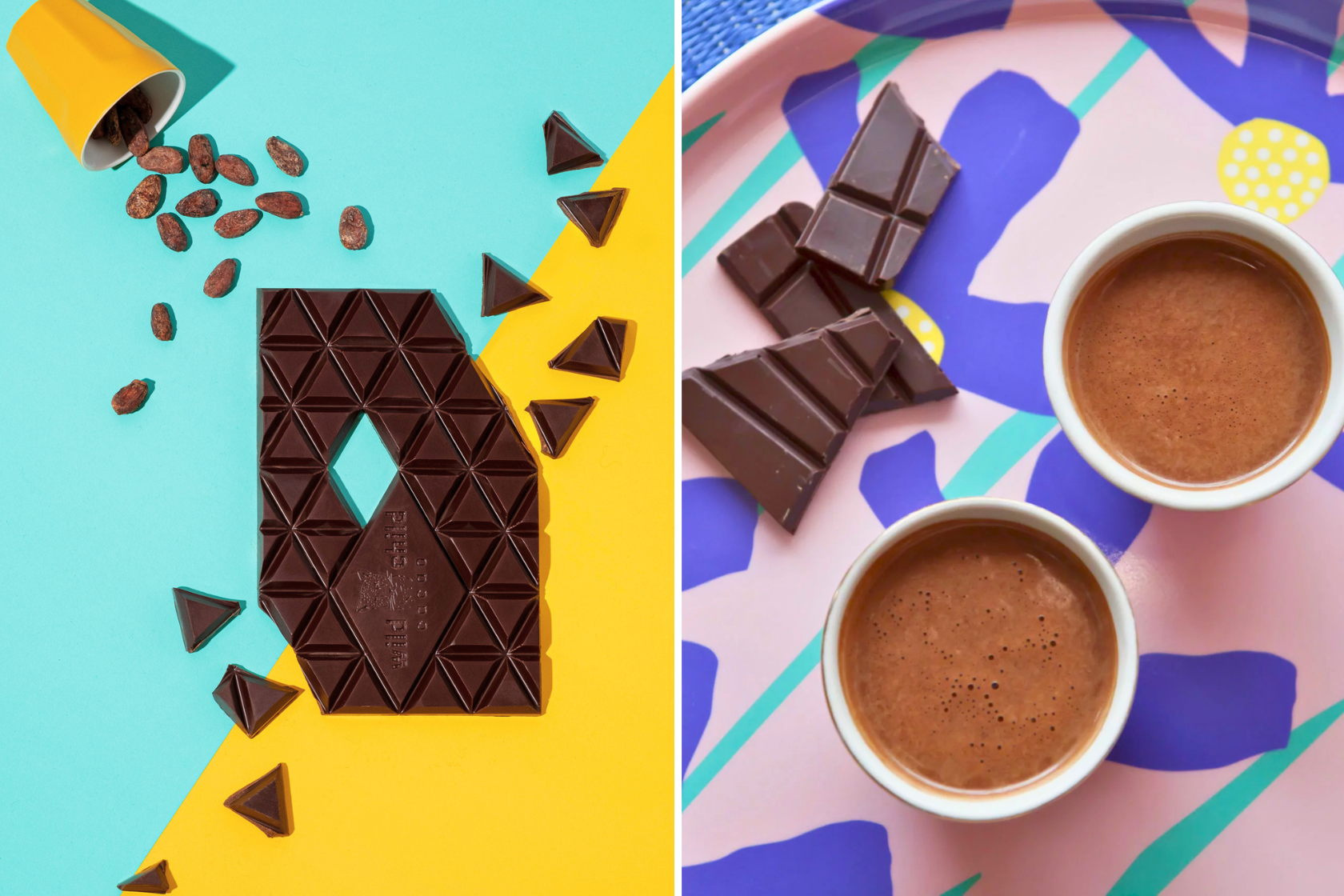
Years of experimenting led her to the carefully grown cacao beans of the Öko Caribe farmers’ cooperative in the Dominican Republic. “After winning the annual Hot Chocolate Awards with these beans, I dove even deeper and developed the perfect roasting profile and method for a 100% ceremonial cacao.” Every bean is hand-selected, carefully roasted and then stone-ground for at least 36 hours. “It is a process that puts me in a meditative state and results in a delicious, smooth, rich and lush cacao drink.”
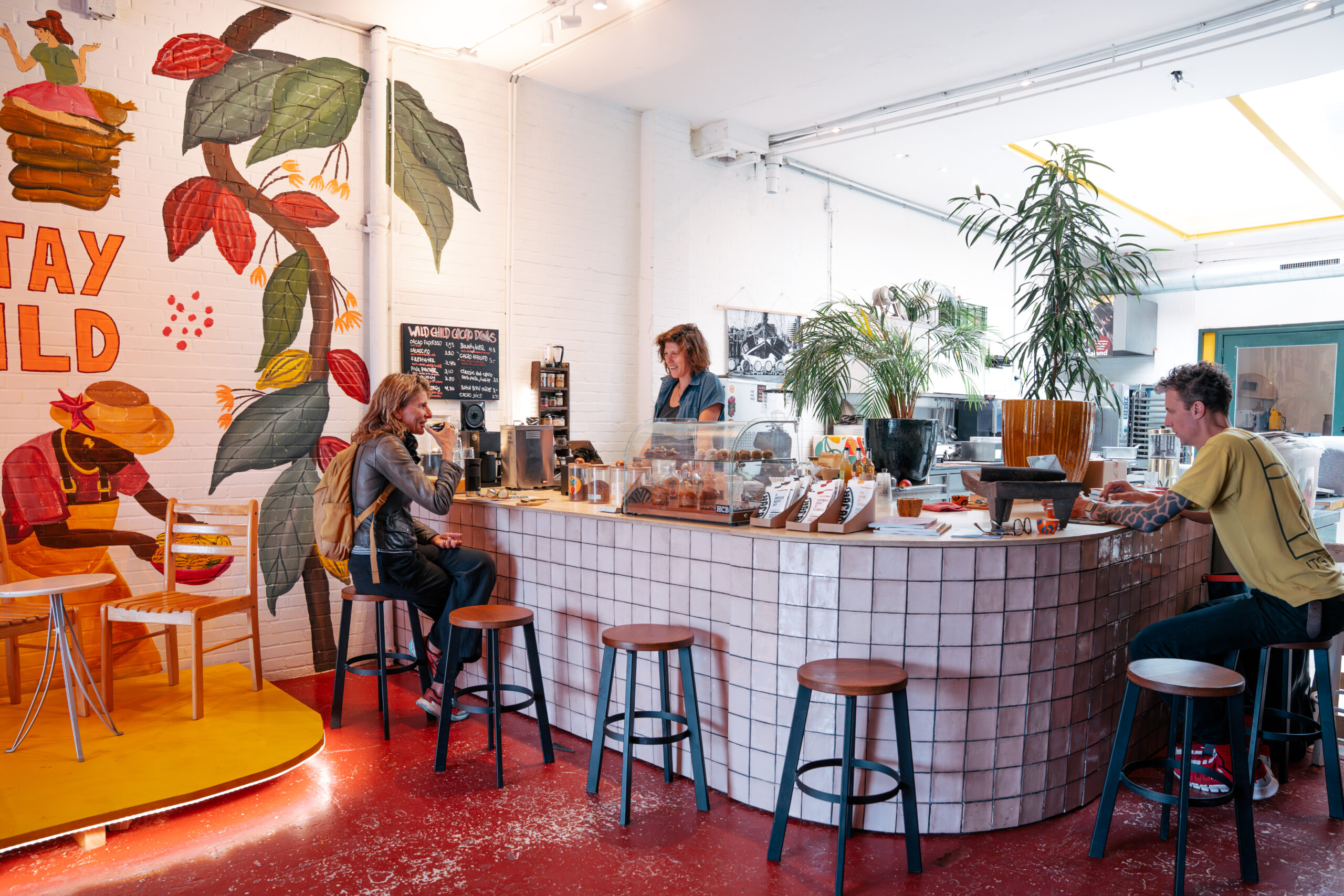
Everything happens in the Wild Child Cacao Café and shop in Amsterdam Noord, where visitors are welcome to taste, join workshops and see how chocolate is really made. And the beans? They cross the ocean 100% powered by wind. “Because the journey is just as important as the destination.”
Creativity as a compass
Malou entered entrepreneurship out of curiosity and creativity, without a preconceived plan. “I had no idea at all that my business would take shape like this, and I really went into it with an open mind and a lot of enthusiasm.” That openness has served her well, although she also learned some hard lessons along the way. “I entered into collaborations out of enthusiasm a bit too often. As a result, I had to learn the hard way how to better protect my own vision and business.” She adds with a laugh: “Fortunately, I still think most people are lovely.”
Getting up every day and carrying on is what Malou is most proud of. “I feel there is now such a beautiful business and place, with people who enjoy working there and customers who enjoy dropping by.”
Giving back to the source
Wild Child Cacao also looks beyond Amsterdam. Malou is setting up a foundation that aims to launch projects and training programmes in countries where cacao comes from. Countries that became part of cacao production through colonialism, but have seen little of the benefits themselves.
Tip from the maker
Malou’s tip for other entrepreneurs is as practical as it is personal: “It was very important to me to be able to make my choices out of creativity and not out of a lack of money. That is why I earned my income from a side job during the first few years. That way I could reinvest every euro I earned with the business. I truly believe this gave me a great deal of freedom. And fun!”
Want to know more about Wild Child Cacao? Visit the café in Amsterdam Noord at Chrysantenstraat 14 or go to the website.